Public Safety Notice
A harmless emergency alert becomes something far worse when people discover their bodies aren't entirely under their control.
Story Information
Author
ZH Stories →Narration
Narration is not currently allowed for this story. Permission may be requested by emailing hello@jinxish.net and including a link to this story.
Public Safety Notice
The emergency alert came through at 11:47 on Tuesday night.
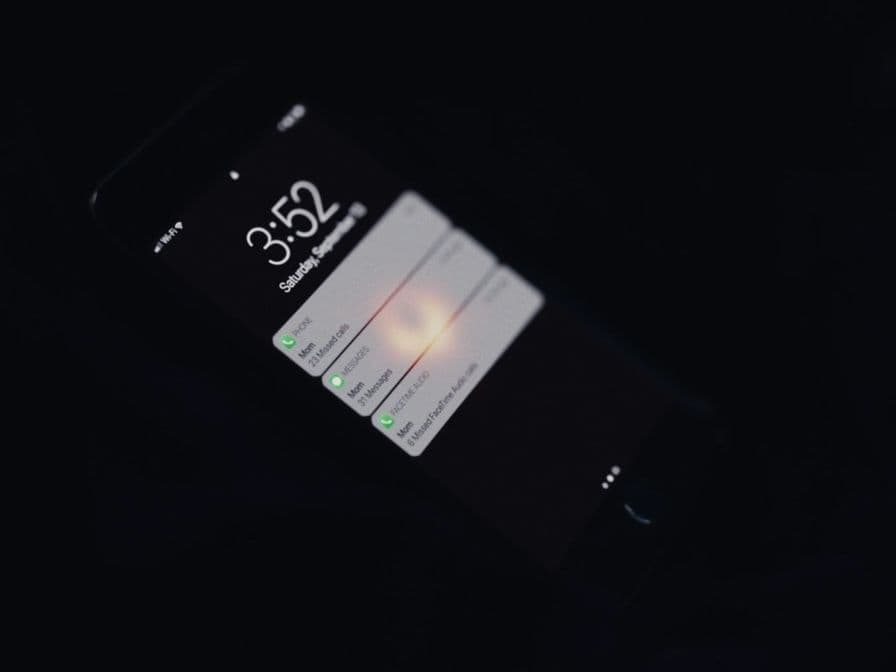
My phone vibrated so loudly against the bedside table that I woke up thinking someone was calling me. Instead, there was a notification covering half the screen.
PUBLIC SAFETY NOTICE
Residents experiencing numbness, involuntary movement, disrupted sleep or unusual repetitive behaviour should remain indoors and await further guidance. Do not restrain affected limbs.
I read it twice before taking a screenshot and sending it to the family group chat.
Dad replied first.
What sort of warning is that?
Mum sent a laughing emoji a few seconds later.
They were both downstairs watching TV, so I got out of bed and went to show them, even though they had obviously received the same alert. Dad was standing in the kitchen with his phone in one hand while Mum was sitting under a blanket at the end of the sofa.
“Someone's hacked the emergency alert system,” Dad said. “There’ll be an apology by morning.”
“Why would it tell people not to restrain their limbs?” I asked.
He looked down at the message again. “Maybe everyone's arms are about to revolt.”
Mum laughed and reached towards the packet of biscuits on the coffee table. “Mine already has.”
Dad told her not to encourage it.
We joked about it for another minute, but there was nothing about the alert on the news. Online, people were posting screenshots and making the same sort of jokes. A few claimed it had only been sent to certain parts of the city, while others said it was probably meant for a hospital and had somehow gone out to the public by mistake.
There were no sirens outside. No police cars. Nothing that made it feel like an actual emergency.
By half twelve, I had stopped thinking about it.
When I woke the next morning, I had three missed calls from my friend Dani and more than twenty unread messages. I didn't check them straight away because I could hear the news downstairs, much louder than usual.
As I reached the bottom step, the presenter was saying that emergency services were investigating reports of a possible neurological condition. Mum and Dad were sitting together on the sofa, staring at the TV without speaking.
A reporter stood outside a hospital surrounded by ambulances. She explained that hundreds of people had been admitted overnight after experiencing numbness, muscle spasms and temporary loss of control in one or more limbs. Officials believed the condition usually began in a hand or arm before spreading to the rest of the body.
Footage appeared beside her of a man being guided towards an ambulance by two paramedics. He looked frightened but otherwise normal until his right arm suddenly swung backwards and grabbed one of them by the face shield.
The man immediately began apologising.
“That wasn't me,” he kept saying. “I didn't do that.”
The footage cut away before the paramedic managed to free himself.
The reporter went on to say that those affected remained conscious during these episodes. In more advanced cases, the condition could interfere with balance, speech and voluntary movement, although officials stressed that the symptoms were temporary and that specialist teams were being sent to affected neighbourhoods.
“Guess it wasn't a prank,” I said.
Neither of my parents answered.
Dad's right hand was resting on his knee, opening and closing in a steady rhythm. His fingers curled into a fist, relaxed, then curled again. It didn't look like a nervous habit. It was too even for that, almost as though the hand was testing how each finger worked.
“Dad?”
The movement stopped abruptly.
He looked down and rubbed his palm against his jeans. “Pins and needles.”
Mum was holding a mug in one hand and stirring it with a teaspoon, but there was nothing inside it. The spoon scraped round and round against the ceramic, making a clinking, irritating sound.
“There's nothing in your cup,” I said, confused.
She glanced down as though she had only just noticed.
For a moment, the stirring stopped. Then her hand began moving again.
“Mum.”
“I know,” she strained.
The reporter warned viewers to avoid unnecessary travel.
A second later, Mum repeated, “Avoid unnecessary travel.”
She said it in the same rhythm as the reporter, only quieter.
Dad turned towards her. Mum looked at him, and then they both turned towards me at exactly the same time.
The movement was so sudden and so perfectly matched that I stepped backwards in surprise.
“What?” Mum asked.
“Nothing.”
Dad's hand began opening and closing again.
I asked whether either of them felt numb, but they both said no. They answered together, the word leaving their mouths at the same time.
Dad laughed afterwards, but it sounded forced. It was all weirding me out, so I told them I was going upstairs to check my messages.
Dani had sent me several videos. The first showed a woman sitting on her kitchen floor while her left hand repeatedly reached for the front door. She had wrapped her other arm around the wrist and was using her whole body to drag it back, but each time she loosened her grip, the hand stretched towards the lock again. The person filming kept telling her not to restrain it.
The next video had already been removed by the time I tried to view it. The third showed a man sitting beside a laptop while his hand typed without him looking at the screen. He was crying and insisting that he was not controlling it. The hand had filled the page with the same three words.
LET THEM IN
Dani's final message said her brother had started doing it too. One hand had opened their back door while the other tried to pull it shut.
I called her, but the call went straight to voicemail.
The government website described it as a temporary neuromuscular condition. It said symptoms usually began in a single limb and could later affect speech, balance and movement. Those affected might experience brief periods in which they were unable to control part of their body, but loss of consciousness was uncommon.
It also said there was no evidence of person-to-person transmission.
The social media posts were less reassuring.
People claimed the episodes became longer as the condition progressed. At first, a hand might move for a few seconds. Later, an entire arm could act independently. After that, people began repeating words they had heard, speaking in unfamiliar tones or walking somewhere without choosing to. Most of them remained aware throughout.
Another account described it as a parasite, although no one seemed to know where that information had come from. According to the post, it entered the nervous system and spread slowly, using the body in short bursts while it learned how everything worked. The stronger it became, the longer those periods lasted. Eventually, the person underneath was only given control back for a few seconds at a time.
It almost always began in the non dominant hand.
I'm right handed.
My left hand was resting beside the laptop while I scrolled through posts and articles.
I tried to lift it.
Nothing happened.
I could feel every finger pressed firmly against the desk. There was no numbness or pain. My arm simply did not respond.
Before I had time to panic properly, the hand moved on its own. It slid across the trackpad, guided the cursor towards the corner of the screen and closed the browser.
I stared at it.
A few seconds later, control returned so suddenly that I jerked my arm against the edge of the desk. I flexed my fingers, lifted my hand and turned it over several times. Everything felt normal again.
I tried convincing myself it had been a spasm. I had been sitting awkwardly, and after watching those videos, I was looking for something to be wrong. Then I reopened the laptop and realised my search history had been cleared as well.
A white van pulled up outside. It had no markings apart from a small blue symbol near the back doors. Three people climbed out wearing white protective clothing and clear face shields before walking towards the house across the road.
Mr and Mrs Ellis had lived there for as long as I could remember. Mr Ellis opened the door, and his wife stood behind him with one arm held tightly against her body.
Even from my window, I could see her hand twisting and reaching towards the workers.
She kept pulling it back, but each time she did, the hand stretched out again.
The workers restrained her and began guiding her towards the van. Mrs Ellis shouted that she was still herself and that it was only controlling her arm. She sounded embarrassed at first, like she was trying to explain some strange accident, but when they opened the rear doors and she saw inside, she began to scream.
There were already people in the van. Some were sitting quietly. Others had been strapped to the seats.
One man pressed his face between them and shouted that he could prove he was still conscious if they would only ask him questions. His body was thrashing against the restraints, but his voice sounded completely normal.
Mrs Ellis's left arm reached towards the nearest worker while the rest of her body twisted away.
“I'm not doing that,” she shouted. “Please, I'm not doing that.”
The doors shut behind her.
I heard a knock on my door, and I jumped away from the window.
“Open the door,” Dad said.
His voice sounded normal.
“We need to talk.”
I moved closer but left the door locked. “Are you all right?”
“Of course I am.”
From somewhere behind him, Mum repeated, “Of course I am.”
She used exactly the same tone.
Dad was silent for a few seconds before lowering his voice.
“They're checking houses. We should tell them about your mother.”
“What about Mum?”
There was a pause.
Then Mum said, “What about Mum?”
I could hear the teaspoon scraping against the empty mug again.
I told Dad that he was acting strangely too.
After a few seconds, they walked away from the door, their footsteps moving down the corridor at the same pace.
Another video had appeared online. It had been filmed from inside one of the vans and showed a woman whispering into her phone while people cried around her. She said the medical teams were not taking everyone to hospitals. The infected were being separated according to how far the condition had progressed.
Some could still fight it. Some lost control for several minutes at a time. Others only seemed to gain control for a few seconds.
The woman turned the camera towards a teenage boy sitting opposite her. He appeared calm, with both hands resting on his knees.
“He came in with his family,” the woman whispered. “They said he passed the first test.”
The boy looked directly at the camera.
His left hand lifted one finger to his lips while the rest of him remained completely still.
The video ended there.
A government warning appeared at the top of the page, stating that unverified claims about parasitic infection and permanent loss of control were spreading online. It urged people to trust official guidance and cooperate with medical workers.
My left hand started moving towards the laptop.
I caught my wrist with my right hand.
The fingers twitched against my grip, pulling towards the keyboard. I held on, remembering the alert's warning not to restrain affected limbs. I had assumed that part was to stop people hurting themselves, but now I wondered whether there was another reason.
For a few seconds, my hand fought me. Then it stopped. Control returned, but only after the page had disappeared from the screen.
Someone knocked on the front door downstairs.
“Medical assistance,” a voice called. “We’re carrying out household checks.”
Mum answered immediately.
“Coming.”
I ran out of my room.
Dad was standing in the hallway with his right hand on the lock. Mum stood beside him, staring towards the door. Her lips were moving silently, forming the same words as the person outside.
I told them not to open it.
Dad looked back at me. “We have to.”
“No, we don't.”
“They're helping people.”
Mum repeated the sentence a moment later, her voice flat.
Dad's hand turned the lock and his expression changed immediately. He looked down at his fingers as though he had only just realised what they were doing.
“No,” he whispered.
His hand pulled the door open, and the workers entered quickly.
Dad tried to move backwards, but his arm reached towards one of them instead. Mum's left hand grabbed hold of a worker's sleeve while the rest of her body pulled away so hard that she nearly fell.
She stared at her own fingers in horror.
“I'm not doing that,” she said.
One of the workers sprayed something on her wrist. Her hand loosened, and they moved in before either of my parents could resist again.
Dad shouted that he was fine and demanded that they ask him questions. Mum kept telling me she was still herself. Halfway through the sentence, her voice changed.
“Still myself,” she repeated. “Still myself. Still myself.”
The words came out in the same tone each time, even while tears streamed down her face.
Then, just as quickly, she seemed to regain control.
“Please,” she cried. “Don't let them take you as well.”
The workers pulled them outside.
I remained near the stairs with my left hand hidden inside the pocket of my hoodie.
One worker stayed behind to speak to me. She wore a clear face shield, and I could only see her eyes properly.
“Is there anyone else in the property?” she asked.
I told her no.
“Have you experienced any symptoms?”
My hand was completely still inside my pocket.
“No.”
“Any numbness or involuntary movement?”
“No.”
“Difficulty speaking or repeating things without meaning to?”
“No.”
She watched me for a few seconds before asking me to show her both hands.
My right hand came out first. Then I slowly removed the left. I expected it to reach towards her. I expected the fingers to twist or jerk, or for the hand to expose me in some obvious way. Instead, it hung loosely at my side.
She asked me to turn my hands over, spread my fingers and touch each fingertip to my thumb.
Both hands obeyed perfectly.
The worker's shoulders relaxed.
She checked my pupils and asked me more questions. I answered all of them without hesitating.
Outside, my parents were being loaded into the van. Mum saw me through the open doorway and shouted that I shouldn't let them take me. Her arm struck the side of the vehicle while she tried to pull it away.
The worker told me I appeared unaffected.
“You'll need to remain inside for now,” she said. “Residents without symptoms may be relocated later today while the area is cleared.”
I asked where we would be taken.
“A temporary safe centre.”
I opened my mouth to tell her the truth then, but my left hand pressed its nails into my palm before the words could leave my throat.
After the worker left, I locked the door behind her and stood alone in the hallway. My left hand remained completely still, even after the van pulled away with my parents inside. That frightened me more than anything it had done before.
A new alert appeared on my phone shortly afterwards.
EVACUATION NOTICE
Residents without symptoms should prepare one small bag and wait for authorised transport. Do not leave your property until instructed.
As soon as I read it, my hand took control. It pulled out my backpack and packed my charger, a clean shirt and my toothbrush. When I saw the workers moving further down the street, it picked up my coat. By the time they returned for me, it had gone still again.
They tested me again before letting me onto the bus. I walked in a straight line, followed a series of simple instructions and held both hands out in front of me while they watched for movement. My body obeyed perfectly.
There were around thirty people travelling to the safe centre with me, and every one of them had passed the same checks.
They brought us to a school on the other side of the city and gave us green wristbands before assigning us beds in the auditorium.
That was yesterday. I have been writing this in pieces ever since because I wanted someone to know that my parents were still conscious when they were taken. Even when their bodies moved without them, they were still in there.
I thought my infection was weaker because it only controlled me for a few seconds at a time. Now I understand that it was being careful. It knew when the worker was testing me, and it packed my bag because it wanted to come here.
There are hundreds of people in the auditorium, all wearing green wristbands. A woman near me has been tapping four times against her bed frame, pausing, then doing it again. The man beside her has started copying her, and now I can hear the same tapping from the other side of the room. Whenever a worker passes, it stops.
An announcement has just come over the speakers telling us the facility is secure. A woman near the doors repeated it in exactly the same voice, then a man near the back did the same. More people are sitting up now, all turning towards the doors.
My left hand has stopped trying to close this page. It is resting calmly beside the keyboard now.
I thought it hid because it was afraid of being caught. I was wrong. It knew this was where they were bringing everyone who could still pass as unaffected.
Rate this story
How disturbing was this one?