Fully Charged
When the factory lights go out, the workers discover something inside them that was never meant to glow.
Story Information
Author
ZH Stories →Narration
Narration is not currently allowed for this story. Permission may be requested by emailing hello@jinxish.net and including a link to this story.
Fully Charged
I started working at the factory because the pay was better than anything else nearby.
The factory manufactured luminous emergency signs for office buildings, hospitals, schools and underground stations. Things like fire exits, stairwell markers and evacuation arrows. The kind of things nobody noticed until the lights went out.
My job was simple. I painted the lettering and symbols with a thick layer of luminous paint, left the signs to dry, then slid them under a row of bright ultraviolet lights. After ten minutes, each sign was placed inside a dark inspection cabinet to make sure it glowed evenly.
The paint had a chemical smell, somewhere between wet plaster and burnt rubber, but the supervisors insisted it was harmless.
“It’s water based,” we were told during training. “No different from decorating paint.”
We were given aprons and told to wash our hands before eating. There were gloves in the storeroom as well, but our manager discouraged us from using them because they made the brushes harder to control. Nobody wore masks.
The paint got everywhere. Underneath our fingernails, on our sleeves, in our hair. We found pale fingerprints on our phones and bags. Once, Lucy put her hand inside the inspection cabinet and noticed the skin around her nails glowing faintly. We all thought it was funny at the time.
“Look,” she said, wiggling her fingers in the darkness. “I’m one of the signs now.”
The glow faded within seconds of her pulling her hand out, and none of us thought about it again.
Lucy was the first person to become noticeably ill. She complained about headaches and a metallic taste that never went away. Then her gums began bleeding whenever she brushed her teeth. Her doctor told her she was probably anaemic.
After that, others started mentioning things. Nadia’s wrists ached whenever she worked near the ultraviolet lights. Elaine developed a rash across both of her hands. A woman on the morning shift started vomiting before work and blamed the smell of the paint.
I also felt unwell sometimes, but never badly enough to leave or miss work. I had frequent headaches and a tightness in my chest after long shifts. Some mornings, I woke with the same metallic taste Lucy described.
But none of us connected it to the factory. Why would we? We had been told that the paint was safe. The signs were going into hospitals and schools, surely a company couldn’t put something dangerous into products designed to protect people.
Management held a meeting after three workers called in sick during the same week. The factory manager stood in front of us with a printed report and said that all equipment had passed every required safety test. He blamed the symptoms on a combination of a seasonal virus, dehydration and poor diets.
“Some of you are working long hours,” he said. “Please remember to take care of yourselves.”
They installed a water cooler beside the break room. That was the only change.
Lucy didn’t return after her next doctor’s appointment. She messaged me to say she had been admitted to hospital because her white blood cell count was dangerously low.
A week later, the power went out. It happened near the end of the afternoon shift, seconds after we had finished activating a large batch of signs for a new railway station.
The ultraviolet lamps cut off first. Then the main lights and machinery died together. For a moment, the factory was completely dark. Then the signs began to glow.
Rows of arrows and white figures glowed across the worktables, their light filling the room with a faint, sickly haze.
Someone laughed nervously.
“At least we know they work.”
A second laugh answered from the other side of the room. That was when we saw her teeth. They glowed through her open mouth. Not brightly, but enough to outline every tooth in a pale green light.
The laughter stopped soon after.
Next to me, Elaine whispered something, and I could see her teeth glowing too. Then Nadia raised both hands to her face, and her fingertips were shining beneath the skin.
As our eyes adjusted to the dark, more of us became visible. Faint lines ran along wrists and forearms. The outlines of ribs appeared from under blouses and aprons.
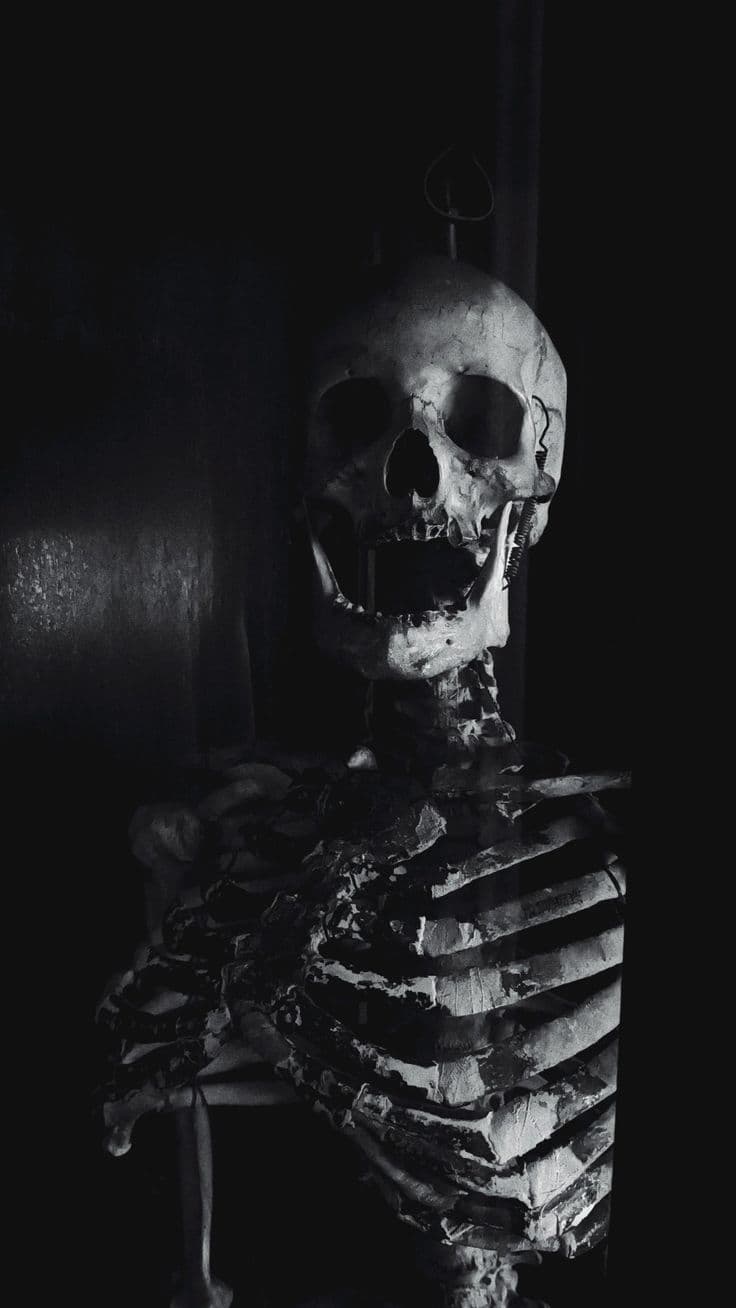
The person who had worked there the longest glowed the brightest. Margaret had been at the factory for almost five years. In the darkness, I could see most of her skeleton. Her hands, jaw and ribs were clearly visible underneath her skin.
She looked down at herself and began to cry.
I raised my own hands to my face. Thin green lines marked the bones of my fingers. The sight made my stomach turn.
The paint didn’t just stain us, it had built up inside our bodies, little by little. Every minute under the ultraviolet lamps had charged whatever had settled in our teeth and bones.
We had never noticed because the glow faded quickly once we left the lamps. By the time we reached home and went to bed, there was nothing left to see.
The power cut had trapped us in complete darkness while we were still fully charged.
The emergency lights never came on. Instead, the factory manager entered carrying a flashlight, followed closely by two supervisors. He swept the beam across the glowing room. When the light passed over his face, he looked frightened, but not surprised.
“Everyone remain where you are,” he said. “The backup system will be restored shortly.”
Margaret stepped towards him.
“You knew.”
He lifted a hand.
“Most of you are still below the treatment threshold.”
It was quiet for a second, then Nadia broke the silence.
“What treatment threshold?” she asked.
The manager realised what he had said and started backing away towards the nearest exit.
Margaret lunged at him. The supervisors tried to hold her back, but the room erupted. Women shouted, shoved tables aside and reached for their phones. One supervisor attempted to lock the main exit.
That was when Elaine collapsed. She hit the floor hard, coughing violently. The glow around her jaw brightened, then spread down her neck and across her chest. Someone called an ambulance while three of us forced the exit open.
The company tried to stop us from leaving. Later, they claimed it was because they were worried about contamination. I think they were worried about witnesses.
Emergency services arrived within minutes. By then, several workers had collapsed. Others were vomiting or bleeding from their mouths.
We were taken to hospital and quarantined. At first, the doctors didn’t know what they were dealing with.
The chemical composition of the paint had not been accurately disclosed on the product sheets provided by the company. It contained several undeclared substances, including one designed to bind permanently to mineral structures. Bones, in other words.
The doctors washed us repeatedly, removed our clothing and gave us medication intended to draw as much of the chemical as possible from our bodies. They kept the wards dim because bright lights caused the pain to worsen.
The worst cases needed bone marrow treatment and surgery.
Lucy died two days after we were admitted. Margaret died the following week. Elaine survived, but part of her jaw had to be removed. Nadia spent three months in hospital and still uses a wheelchair.
I was luckier. I had worked at the factory for less than six months. Most of the material had not yet settled deeply into my bones.
The company denied knowing the paint was dangerous. They said workers had ignored safety guidance, despite never giving us masks and actively discouraging gloves. They claimed the manager’s comment about a treatment threshold had been misunderstood.
The factory closed and reopened under another name six months later.
The doctors told me that the chemical still circulating in my body should leave my system within a year.
Most nights, I believe them. Then the power goes out, or I step into a dark room after spending too long in bright light, and I can still see my teeth glowing in the mirror.
They are much dimmer now.
Those who had worked there longer were not so fortunate.
Rate this story
How disturbing was this one?